

Experiential learning

Group Relations

Learning about groups, organisations and their environments through experience.

A Group Relations conference brings people together to study what happens as they form groups, take up roles and encounter questions of leadership, authority, belonging and difference. The environment is part of that study: a room or digital platform, the institution that hosts the conference, and the wider social field all shape what can happen. Participants can explore these relationships through their own experience.

There are structures and boundaries for the work, but no prescribed lesson that everyone must reach. What happens between participants and staff, and in relation to the physical, digital and social environment, becomes material for inquiry. People may leave with new questions about their roles and the systems of which they are part.

To explore the language of this work, see authority, boundaries and primary task in the glossary.

Adapting the method

I have directed conferences and developed other forms of experiential work in settings where the method needed to respond to a different task, place or institutional life. Adaptation begins by asking what people are here to study and what kind of space could make that learning possible.
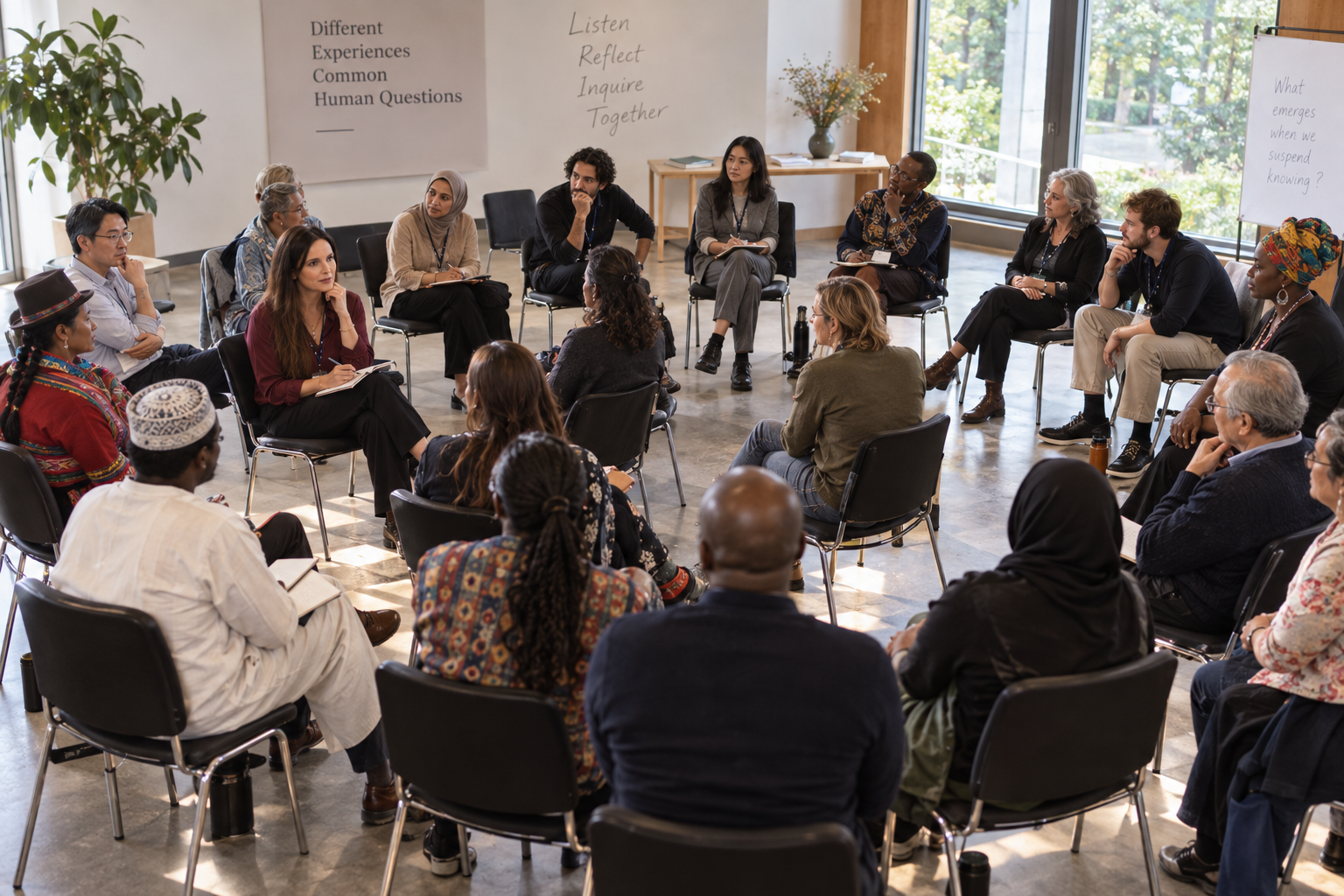
Illustrative scene of people listening and thinking together in a circle
From practice

Different settings, different questions

01 / Online

Learning in a virtual space

With Dr Benedikt Hegner, I developed The Territory, a bespoke platform for online Group Relations work. It gives people freedom to move, choose where to meet and notice how a shared space shapes their experience. The platform is part of the inquiry, rather than simply a way to connect.

I directed Exploration in Human Relations in Shifting Virtual Environments (26–28 September 2025), a conference hosted by the New York Center for the Study of Groups, Organizations, and Social Systems ↗. The design invited members to study the psychodynamics of beta testing as the conference moved from Zoom into The Territory, which was still in development. Its digital environment shaped possibilities for movement, contact, presence and authority.

Some members entered The Territory before the planned transition, raising questions about boundaries between the two settings. Later, a hosting disruption interrupted a Large Study Group. A Socio-Technical Research Team made the technical conditions visible and helped the conference consider how to continue. Presented with options, members voted to hold plenaries in Zoom while Review and Application Groups continued in The Territory. Their decision changed the organisation of the conference and became part of what could be learnt about working together in an uncertain environment.

02 / Switzerland

Working in psychiatric services

In Geneva, I adapted elements of Group Relations for professionals working in child and adolescent psychiatric care. At the HUG Maison de l’Enfance et de l’Adolescence, an institutional workshop made room to study roles, authority and the emotional demands of care through reflection and embodied experience. The hospital, its services and the wider networks around children and families were part of the environment to be considered. I later directed a Group Relations conference in the hospital context.

The work asked how staff and institutions might think together when the task of care is under pressure.

03 / Organisations

Culture and change at work

I have also developed adaptations of Group Relations and related socioanalytic methods in telecommunications, finance and energy. These were part of complex interventions concerned with organisational culture and change. The design in each setting had to take account of its task, authority relations and history, as well as the sector and wider environment in which people worked.

What might this method make possible in your setting?

We can begin with the question your group or organisation is facing.

Start a conversation